Almost nobody replaces a working pool heater. They wait until it fails, then replace it with whatever's fastest — usually the same thing they had. That's how a lot of homeowners end up on their third gas heater without ever running the numbers on the alternative. If any of these five describe your situation, it's worth running them now, because the moment you're already spending money is the moment solar is cheapest to get into.
1. Your gas bill spikes every swim season
You know the pattern: the bill is normal all winter, then April hits and it doubles. Heating a pool with gas in Southern California commonly runs several hundred dollars a month while you're using it, and that never improves — it's the cost of operating the thing, not a sign anything's wrong.
This is the clearest signal, because it's the one that compounds. Every season you keep the gas heater, you spend that money again. Solar's running cost is close to zero, which is why a system on a medium pool typically pays for itself within two to four seasons of regular use.
2. You're repairing it more than using it
Gas heaters are combustion appliances with a lot to go wrong: burners, igniters, heat exchangers, gas valves, sensors. Typical lifespan is 5 to 10 years, and the last couple of those tend to be expensive. Once you're calling for service more than once a season, you're paying an installment plan on a machine that's already failing.
A solar system has mats, plumbing, a few valves, and a controller. Less to break, and 12 to 20 years of life with a 12-year manufacturer warranty on the panels. When something does go wrong, it's usually a straightforward repair rather than a replacement.
3. The heat is inconsistent
An aging heater gets unreliable before it gets dead. Temperature wanders, it takes longer to come up, it cycles oddly, some days it just doesn't. That's usually a heat exchanger or a sensor telling you what's coming.
Worth being straight here: solar isn't the fix for every version of this problem. Solar delivers steady heat whenever the sun's out, but it can't heat on demand at 11pm or push through a week of overcast. If what you actually need is heat on command in January, gas does something solar doesn't — and plenty of homeowners run solar for the season with the gas heater kept as backup.
4. Your season keeps getting shorter
This one's subtle, because it doesn't look like a heater problem. It looks like you just don't swim much anymore. But often what happened is the gas bill trained you out of it — you stopped turning the heater on in May and October because you knew what it cost, and the season quietly shrank to the weeks the weather did the work for you.
A properly sized solar system raises pool temperature 10–15 degrees, which for most homeowners means swimming comfortably May through October. The difference isn't that the water gets hotter. It's that you stop doing arithmetic before you turn it on.
5. You're replacing the heater anyway
This is the moment, and most people miss it. If your gas heater has died and you're about to spend $2,500 to $5,500 replacing it, you're not comparing solar against zero — you're comparing it against that number. Solar runs $5,000 to $10,000 installed depending on pool size, so the real gap is smaller than the sticker suggests, and it's the last one you'll pay. Spend a little more once, or a little less now and several hundred a month forever.
If you're at this fork, our solar vs gas vs heat pump comparison lays out all three options with real numbers.
What switching actually involves
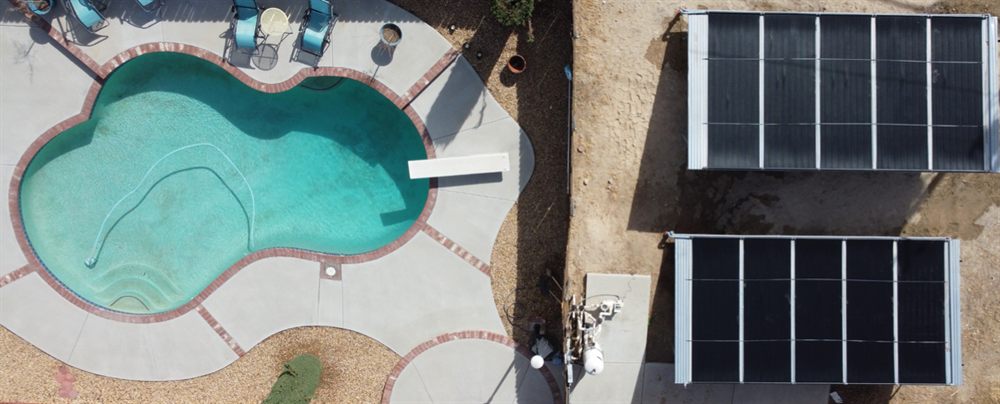
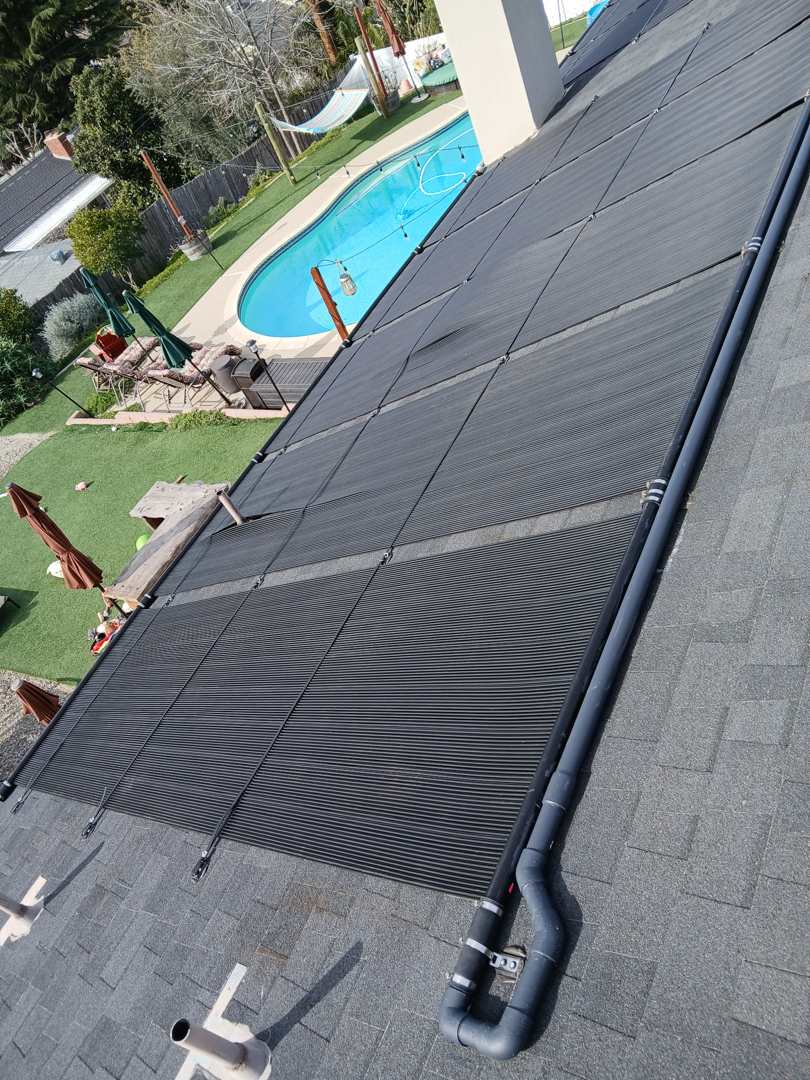
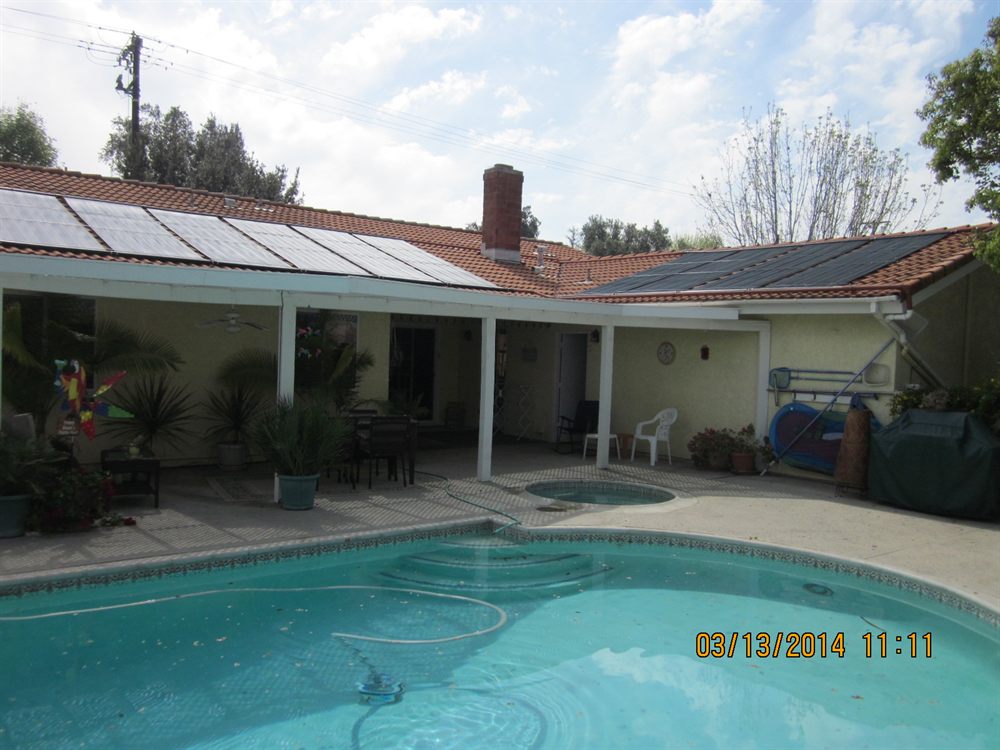
Less than people expect. Solar is thermal, not electric — water runs through black mats on the roof and comes back warmer. There's no inverter, no new electrical work, and no gas line. It plumbs into the pool pump you already run, and a typical residential install is done in a day. If you already have solar panels up there and they've failed, that's a system replacement instead — often simpler, because the plumbing and roof penetrations are already in place.
You don't have to remove a working gas heater, either. Leaving it in place as backup is a common, sensible setup: solar carries the season at almost no cost, and the gas is there for the cold snap or the party.
Not sure whether your pool is a good candidate? Build an estimate online from a satellite view of your roof, or call us at (951) 276-8286. If your roof won't support a system that performs, we'll tell you that before you spend anything — we'd rather lose the job than sell you one that disappoints you.