Ask three homeowners how they heat their pool and you'll likely hear three different answers — and see three very different monthly bills. The price tag on a heater tells you almost nothing about what it actually costs to keep your pool warm over the years you own it. That number comes from the installed cost plus what you spend running it, season after season. Here's how solar, gas, and heat pump systems typically compare, with real ranges instead of guesses.
| Solar | Gas heater | Heat pump | |
|---|---|---|---|
| Upfront installed cost | $5,000 – $10,000+ | $2,500 – $5,500 | $4,500 – $8,000+ |
| Typical monthly running cost | Little to none | Several hundred/mo (in season) | Low-to-mid hundreds/mo |
| Typical lifespan | 12–20 years | 5–10 years | 10–15 years |
| Warranty | 12-yr panels + 1-yr workmanship | Varies by brand | Varies by brand |
| Heats in any weather? | No — needs sun | Yes, any time | Mostly — best in mild air |
| Best for | Regular swimmers watching costs | On-demand heat, any season | Steady use in mild weather |
Solar pool heating
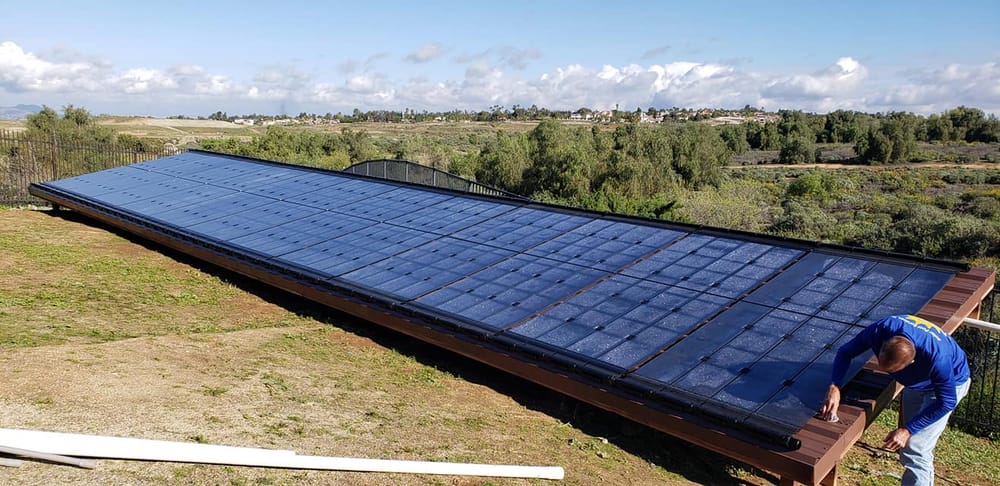
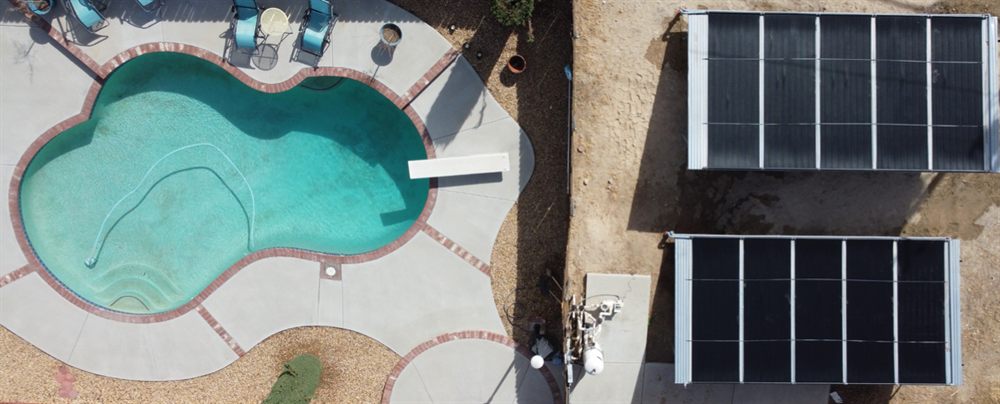
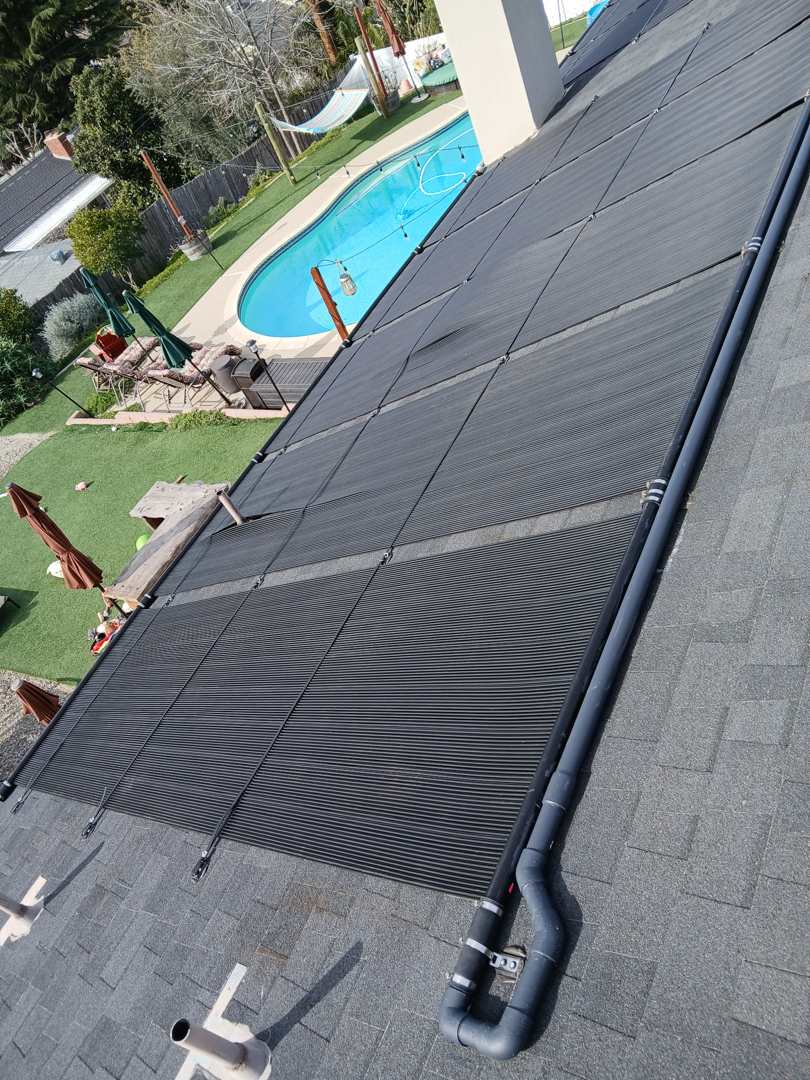
Solar costs the most upfront — typically $5,000 to $10,000 or more installed, depending on pool size. A small pool typically runs $5,000–$7,000 installed, a medium pool $7,000–$8,000, and a large pool $8,000–$10,000, which matches the pricing we quote for actual installations. Our cost guide breaks down what moves a quote inside that range. Once the panels are on the roof, running cost is close to nothing: a solar system uses the pool pump you already run, so there's no new utility bill to track. Panels typically last 12 to 20 years, backed by a 12-year manufacturer warranty on the panels themselves plus our own 1-year full workmanship warranty on the installation. A properly sized system typically raises pool temperature 10–15 degrees, which is enough for most homeowners to swim comfortably from May through October.
The trade-off is sunshine. Southern California has it in abundance, but a solar system can't call up heat on demand — it can't warm the pool for a midnight swim or push through a solid stretch of clouds the way a gas heater can. What it delivers instead is steady, nearly free heat for as long as the sun's out.
Gas pool heaters
Gas heaters are the cheapest to install, typically $2,500 to $5,500. The real expense shows up on the utility bill: heating a pool regularly with gas in Southern California commonly runs several hundred dollars a month during the swimming season, depending on pool size, target temperature, and gas rates. They also tend to wear out faster than the other two options, with a typical lifespan of 5 to 10 years.
What gas buys you is speed and certainty. It heats water fast, on demand, in any weather, any time of year — useful if you want to swim in January or need the pool warm on short notice regardless of the forecast.
Heat pumps
Heat pumps sit in the middle on price, typically $4,500 to $8,000 or more installed. Running cost also lands in the middle — commonly low-to-mid hundreds of dollars a month with regular use, depending on electric rates. Expect a typical lifespan of roughly 10 to 15 years.
A heat pump pulls warmth from the surrounding air rather than burning fuel, so it heats more slowly than gas and works best when the air itself is already warm. That suits mild Southern California weather well, but it means a heat pump is less effective than gas on a genuinely cold night.
The payback math
Here's how the numbers tend to play out for a typical medium-sized pool. Solar installed runs $7,000–$8,000. Heating the same pool with gas across a roughly six-month swimming season can mean several hundred dollars a month going out the door — money you keep spending for as long as you own the pool. Weigh the two against each other and solar typically pays for itself within two to four swimming seasons of regular use. After that, the heat is effectively free for the rest of its 12–20 year life. Your own numbers depend on how warm you keep the pool and how long your season runs, but the direction holds for most homeowners who swim more than the occasional weekend.
Mixing them
You don't have to choose only one. Some homeowners run solar as the primary heat source and keep an existing gas heater on hand as backup — a quick boost during a cold snap, before a party, or in the shoulder weeks outside the main solar season. It's an honest, common setup: solar covers most of the season at almost no running cost, and gas is there on the days you want heat on demand.
Curious what solar would actually cost for your pool? Build your own estimate online, see our real installation pricing by pool size, or call us at (951) 276-8286 — the advice is free either way. We install across Riverside, Orange, and San Bernardino counties.