Most people don't buy a pool heater because they're excited about heaters. They buy one because the pool is cold five months a year and nobody's using it. Solar is worth understanding because it changes the math on that problem in a way the other options don't — you pay once, up front, and then heat is close to free for as long as the panels last. Here's what that actually looks like, and where it falls short.
It costs almost nothing to run
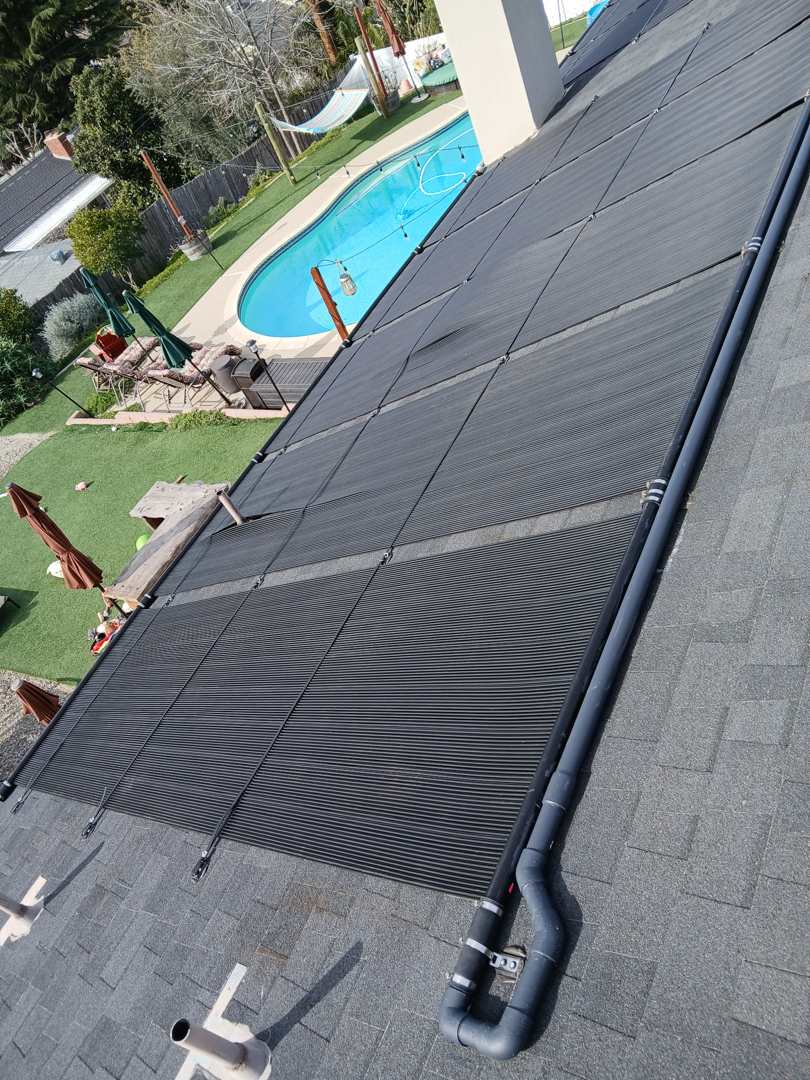
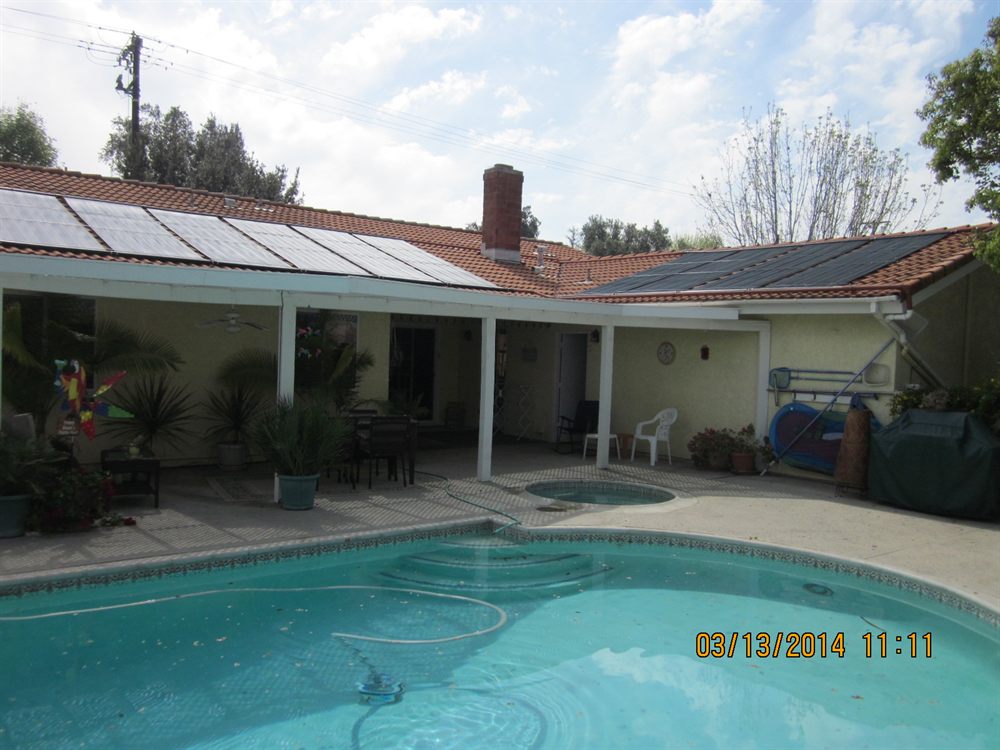
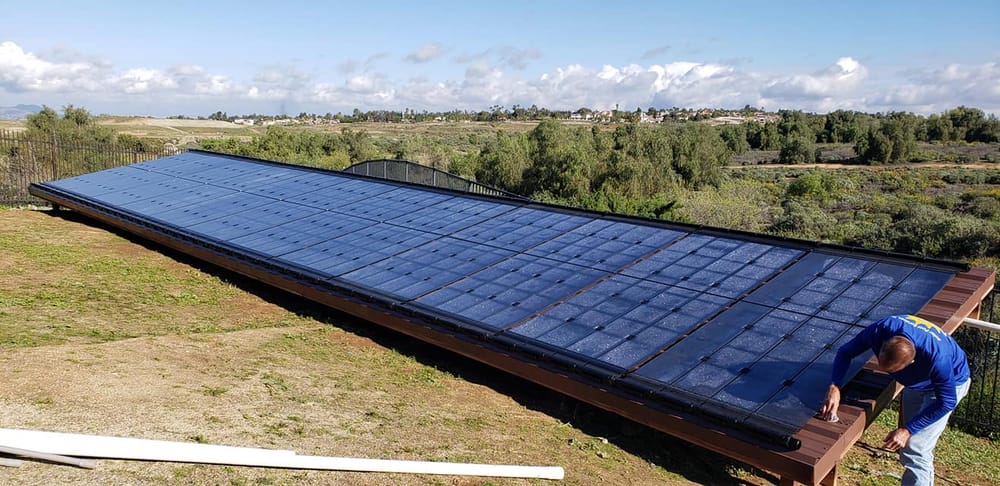
This is the whole argument, and everything else is a footnote to it. A solar system uses the pool pump you're already running — water takes a detour up to the roof on its way through the filter, warms up, and comes back. There's no gas burner and no compressor, so there's no second utility bill. Our How It Works page walks through the whole loop, valve by valve. Once it's installed, keeping the pool warm doesn't cost you anything month to month.
Compare that to a gas heater, which is cheap to install and then charges you several hundred dollars a month during the season, every season, for as long as you own the pool. The gap compounds. A solar system on a medium pool typically pays for itself within two to four swimming seasons of regular use, and after that the heat is effectively free for the rest of its 12–20 year life. We put the full side-by-side in our solar vs gas vs heat pump comparison if you want the numbers.
It buys you months, not degrees
A properly sized system raises pool temperature by roughly 10–15 degrees. That number sounds modest until you map it onto a calendar. Ten degrees is the difference between water nobody wants to get into and water that's genuinely pleasant — so it moves your season from the warmest stretch of summer to something more like May through October. Most homeowners find they go from using the pool a few months a year to using it about twice that.
That's the honest way to think about the value. You're not buying a hot tub. You're buying back the shoulder months you already paid for when you built the pool.
There's less to break
A gas heater is a combustion appliance: burners, igniters, heat exchangers, gas valves, sensors. Every one of those is a thing that eventually fails, which is why gas heaters typically last 5 to 10 years. A solar system is mats, plumbing, a couple of valves, and a controller. Fewer moving parts means fewer service calls and a longer life — 12 to 20 years is typical, and the panels carry a 12-year manufacturer warranty.
It isn't maintenance-free, and anyone who tells you otherwise is selling something. It's just that the maintenance is small and infrequent. Our guide on making a system last covers the handful of habits that matter.
It's clean, and it's quiet
Nothing burns. There are no emissions from heating your pool, no gas line to run, and no exhaust. There's also no noise — a running solar system is silent, because the only moving part is the pump that was already running anyway. If you've ever stood next to a gas heater cycling on, that difference is more noticeable than you'd expect.
Title 24 may have made the choice for you
California's Title 24 energy standards changed this conversation, and most homeowners haven't caught up with it yet. If you want a gas heater on your pool, code requires solar heating alongside it — at least 0.6 square feet of solar panel for every square foot of pool surface, which is 60% coverage. Don't want a gas heater? Then the requirement doesn't apply. Solar on its own is never the thing being regulated.
That's worth reading twice, because the implication is easy to miss. Title 24 doesn't force solar on you — it forces solar on you if you want gas. So a lot of people who think they're choosing between solar and gas are really choosing between solar, and solar plus a gas heater. Once the panels are going on the roof either way, letting them do the heating is a much easier case to make.
Every panel we install meets Title 24 requirements. One caveat worth knowing up front: that 60% is a code floor, not a performance target. We size systems closer to 80% coverage, because 60% will pass an inspection and still leave you disappointed in May. The cost guide gets into why.
Buyers notice it
A paid-off solar system is a feature when you sell: the next owner gets a heated pool without inheriting a monthly bill to run it. We'd be overstating things if we promised a specific bump in your home's value — that depends on your market and your buyer. But an efficient, low-running-cost system is easier to sell than a fifteen-year-old gas heater, and it's one less thing a buyer asks you to replace.
When solar isn't the right call
It needs sun. That's not a small caveat, and it's the reason we turn some jobs down. If your roof is heavily shaded, or there simply isn't enough usable area facing the right way, a solar system won't perform and we'll tell you so before you spend anything. East- and west-facing roofs do work, they just need about 20% more panel coverage to get there.
Solar also can't produce heat on demand. It can't warm the pool for a midnight swim, and it can't push through a long stretch of overcast. If you need the pool warm on short notice in January regardless of the forecast, gas does something solar can't — and some homeowners run both, using solar for the season and keeping a gas heater as backup for cold snaps.
The upfront cost is also real: typically $5,000 to $10,000 installed depending on pool size, against $2,500 to $5,500 for a gas heater. Solar wins on total cost of ownership, not on the first check you write. If you're only going to swim a handful of weekends a year, that math may never catch up, and it's fair to say so.
Is it right for your pool?
Southern California is about as favorable as it gets for this — abundant sun, a long shoulder season worth reclaiming, and gas rates that make the running-cost gap obvious. We see it every week across Riverside, Orange, and San Bernardino counties. If you swim more than occasionally, have a roof with decent sun exposure, and plan to be in the house long enough to clear the payback, solar is usually the option that costs you the least over the years you actually own it.
Want to know what it would cost for your pool specifically? Build your own estimate online from satellite imagery of your roof, see what an installation includes, read what drives the price in our cost guide, or call us at (951) 276-8286. The advice is free, including the part where we tell you it's not a good fit.